
Fix the 5 Most Common Home Problems Without Calling a Professional
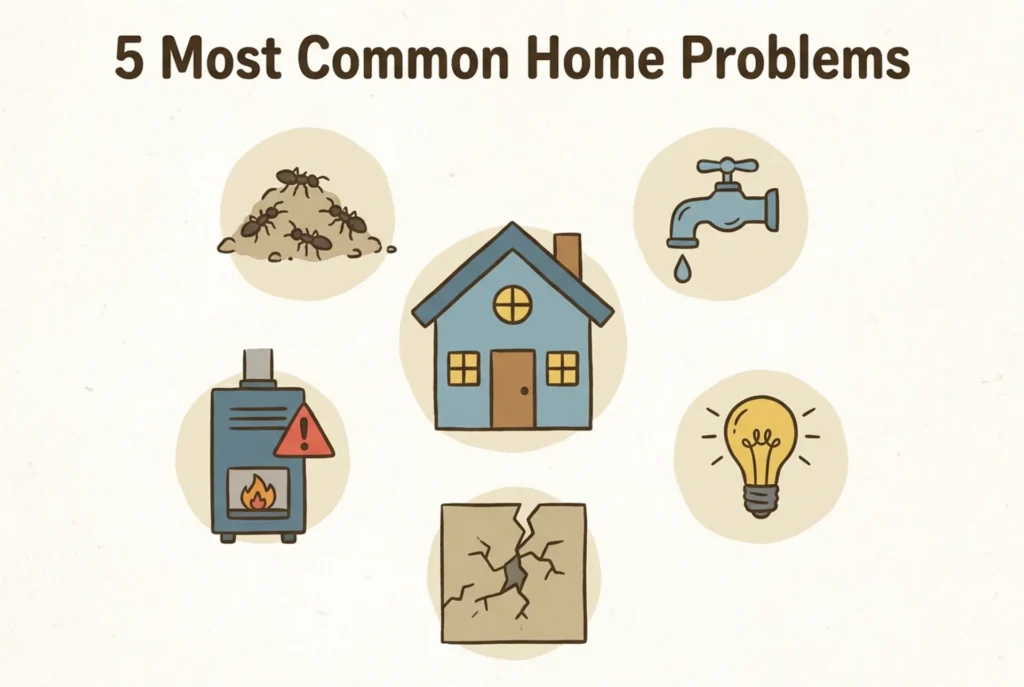
Calling a tradesperson for a small home repair costs, on average, €80–150 just for the call-out, before any parts or labour. Most common household problems can be resolved in under an hour by anyone with a basic toolkit and this guide.
Problem 1 – A Running or Leaking Toilet
A toilet that keeps running after flushing wastes hundreds of litres of water per day and inflates your utility bills. The cause is almost always one of two things: a faulty flapper valve or a misaligned float.
Flush and watch the mechanism. If water keeps flowing into the bowl, the flapper isn’t sealing. If water overflows into the overflow tube, the float is set too high.
Turn off the water supply (the valve behind the toilet), flush to empty the tank, unhook the old flapper, take it to a hardware store to match the size, and fit the new one. The entire process takes under 15 minutes.
On a ball-float system, bend the arm down slightly. On a cup-float system, pinch the clip and slide the float down the shaft. The water level should sit about 2.5cm below the top of the overflow tube.
Problem 2 – A Dripping Tap
A tap that drips once per second wastes over 11,000 litres of water per year. The fix is almost always a worn washer or O-ring — parts that cost less than €2 and take 20 minutes to replace.
Turn off the water at the isolation valve under the sink, open the tap fully to release residual pressure, unscrew the tap head (usually hidden under a decorative cap), and you’ll find either a rubber washer or a ceramic disc cartridge. Replace whichever is worn. Ceramic disc cartridges are more common in modern taps and replace as a single unit.
Before starting any plumbing repair, always know where your main water stopcock is located. If something goes wrong during the repair, you need to be able to shut off the water supply to the entire property within seconds.
Problem 3 – A Sticking or Squeaking Door
Doors stick because of swelling timber (seasonal humidity changes), worn hinges, or a slightly shifted frame. Squeaking is almost always the hinges. Both are simple to fix.
Squeaking: Remove the hinge pin (tap it out from below with a screwdriver and hammer), coat it with petroleum jelly or a dry lubricant spray, and replace it. Done in five minutes.
Sticking: First check whether the door is catching on the frame — look for paint marks where contact is happening. If it’s minor, rub a candle or wax stick on the contact point. If it’s more significant, remove the door from its hinges and use a hand plane or coarse sandpaper to take back the edge that’s catching, then repaint the bare wood.
Problem 4 – Holes in Plaster or Drywall
Small holes from picture hooks, doorknobs, and accidental impacts are among the most common cosmetic issues in any home. They’re also among the easiest to fix, with results indistinguishable from the original wall surface when done correctly.
- Small holes (under 10mm): Fill with a ready-mixed filler using a putty knife, overfilling slightly. Once dry (usually 2–4 hours), sand flush and paint.
- Medium holes (10–60mm): Apply a self-adhesive mesh patch over the hole, then skim filler over it in two thin coats. Sand and paint once fully dry.
- Large holes: Cut back to the nearest studs, fit a timber backing board, cut and fit a new piece of drywall, tape the joints, skim, sand, and paint. This requires more skill but is entirely achievable.
Problem 5 – A Tripped Circuit Breaker That Won’t Reset
A circuit breaker trips to protect your home from overload or a short circuit. Repeatedly tripping usually indicates either too many appliances on one circuit, or a faulty appliance creating a persistent fault.
To reset: switch the breaker fully to the off position (it typically needs to go past the middle position to reset), then switch it back on. If it trips immediately, unplug everything on that circuit and reset again. If it holds, plug appliances back in one at a time until the culprit is identified.
If the breaker trips with nothing plugged in, or if you see signs of burning, scorching, or smell burning plastic, do not attempt further DIY — call a qualified electrician immediately.
These five repairs collectively represent the majority of call-outs handled by tradespeople for standard residential properties. Learning to handle them yourself saves the average homeowner €500–800 per year — and gives you the confidence to tackle progressively more complex projects over time.
- info@negoziorapido.com