
The Essential DIY Toolkit: 10 Tools Every Home Owner Must Have
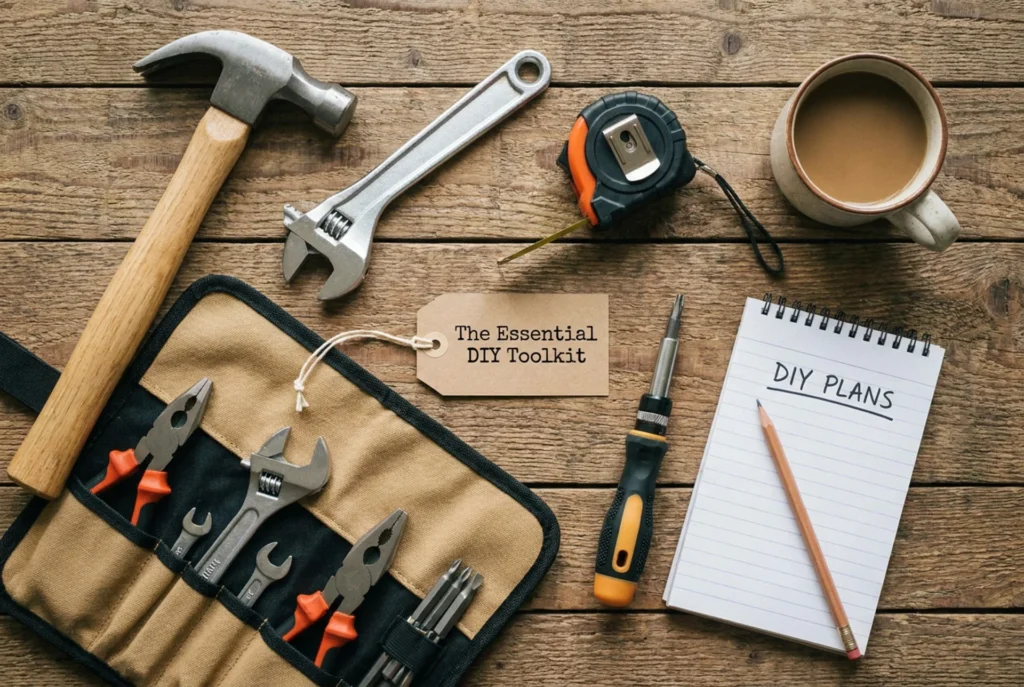
You don’t need a professional workshop to handle most home repairs and improvements. What you do need is the right set of tools — reliable, well-chosen, and suited to the tasks you’ll actually face at home.
Why the Right Tools Make All the Difference
Every experienced DIYer will tell you the same thing: using the wrong tool for a job is more dangerous, more frustrating, and produces worse results than using the right one. A quality toolkit doesn’t mean owning everything at the hardware store — it means having a curated selection of versatile, dependable tools that cover 90% of home tasks without duplication or waste.
This list is built for the homeowner who wants to handle everyday repairs, small renovations, and assembly jobs independently — without paying tradesperson call-out fees for jobs that take 20 minutes with the right equipment.
The Core 10
- Cordless drill/driver: The single most versatile power tool in any home. Used for driving screws, drilling holes, and with the right attachments, mixing paint or tightening bolts. Choose an 18V model with two battery packs.
- Claw hammer: Still irreplaceable. A 450g (16oz) curved-claw hammer drives nails, removes them, and handles light demolition work. Invest in a forged steel head with a rubber-grip handle.
- Tape measure: A 5m / 16ft locking tape measure with a wide, stiff blade that holds its shape when extended. Mark your measurements in pencil, never pen — pencil can be erased.
- Spirit level: For hanging pictures, fitting shelves, and checking that surfaces are truly horizontal or vertical. A 60cm aluminium level covers most home uses.
- Set of screwdrivers: Both flat-head and Phillips, in a range of sizes. Magnetic tips prevent screws from falling into unreachable gaps — a detail that matters more than you’d think until you need it.
- Adjustable wrench: Replaces a full set of fixed spanners for most plumbing and furniture assembly tasks. A 250mm model handles the majority of domestic bolt sizes.
- Utility knife: For scoring, trimming, cutting cable ties, opening packaging, and dozens of small jobs. Keep spare blades — a sharp blade is always safer than a dull one.
- Pliers set: Combination pliers, long-nose pliers, and wire cutters. Invaluable for electrical work, bending wire, gripping awkward nuts, and general-purpose gripping.
- Stud finder: Essential before drilling into any wall. Drilling into a hidden pipe or cable is both expensive and dangerous. A basic electronic stud finder costs little and pays for itself the first time you use it.
- Circular saw or jigsaw: For cutting timber, sheet materials, and flooring. A jigsaw is more versatile and easier to handle for beginners; a circular saw is faster for straight cuts in larger quantities of material.
Buy tools in the middle of the range, not the cheapest. Cheap tools fail at the moment you need them most — stripped screwdriver tips, broken drill chucks, snapping tape measures. You don’t need professional-grade equipment, but you do need tools that can handle the job without letting you down.
What to Buy First
If you’re starting from zero, begin with the cordless drill, a hammer, a tape measure, and a screwdriver set. These four tools handle the vast majority of everyday home tasks — furniture assembly, picture hanging, minor repairs. Add the others over time as specific projects demand them.
Resist the temptation to buy large combo kits. They often include tools you’ll rarely use and compromise on quality across the board. Instead, buy individual tools in the sequence you actually need them: your toolkit will be smaller, better, and far more useful.
Storage and Maintenance
A good toolkit stays good only with basic maintenance. Wipe metal surfaces with a lightly oiled cloth after use to prevent rust. Store sharp tools with blade guards where possible. Keep batteries for cordless tools at a 40–80% charge level if storing long-term — full charge or complete discharge both shorten lithium battery life.
Invest in a proper toolbox or wall-mounted tool rack. Knowing where everything is before you start a job removes half the frustration from DIY work.
- info@negoziorapido.com