
DIY Safety 101: The Rules That Prevent 90% of Workshop Accidents
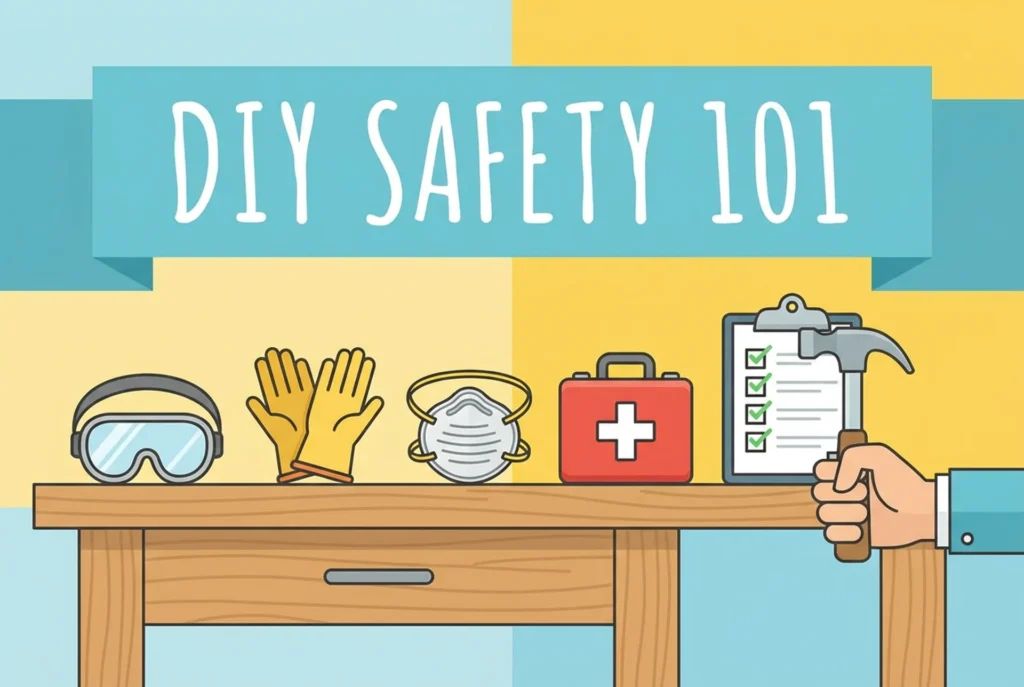
Most DIY accidents don’t happen because someone was unlucky. They happen because one simple safety rule was ignored — usually in a moment of rushing, overconfidence, or distraction. These are the rules that matter most.
Rule 1 – Wear the Right Personal Protective Equipment (PPE)
PPE is not optional, even for small jobs. It takes 30 seconds to put on safety glasses; it takes surgery and months of recovery to repair an eye damaged by a flying wood chip. The minimum for most DIY tasks:
- Safety glasses or goggles: For any cutting, drilling, grinding, or work overhead. Standard prescription glasses are not safety glasses — they are not impact-rated.
- Hearing protection: For any power tool used for more than a few minutes. Hearing damage is cumulative and permanent.
- Dust mask (P2/FFP2 rated): For sanding, cutting wood or plasterboard, or any work that produces fine particles. Basic paper masks do not filter fine particles effectively.
- Work gloves: For handling rough materials, heavy objects, or sharp edges. Note: gloves should not be worn when operating rotating tools (drills, lathes) — they can catch and drag your hand in.
- Non-slip footwear: Closed-toe, with grip soles. Never work in sandals or bare feet around tools or heavy materials.
Rule 2 – Read the Manual Before You Use Any New Tool
This rule is almost universally ignored and accounts for a disproportionate share of tool-related injuries. Every tool has specific safety requirements, operating limits, and warnings. A 10-minute read of the manual before first use eliminates the risk of misusing the tool in a way that its designers specifically warned against.
Pay particular attention to: maximum safe speeds, recommended accessories (never use an angle grinder disc on a circular saw, for example), kickback risks, and lockout procedures for maintenance.
Never disable or bypass a safety guard. Guards exist because someone was seriously injured before the guard was designed. Removing a blade guard for a “quicker” cut has resulted in amputations. The few seconds a guard costs you are not worth the risk.
Rule 3 – Secure Your Workpiece
The single most common cause of cutting injuries is workpieces moving unexpectedly. A piece of wood that shifts as you cut through it can bind the blade, cause kickback, or redirect the tool toward your hand. Always clamp, vice, or otherwise secure whatever you are cutting, drilling, or sanding before you start.
Never hold a workpiece with your hand and cut toward it. Never use your body as a workbench. Two clamps cost less than €10 and are among the most important safety investments in any toolkit.
Rule 4 – Work in Good Light and a Clear Space
Poor lighting causes mistakes. Cluttered workspaces cause trips and falls — the most common type of DIY injury. Before starting any task, spend five minutes clearing the area: remove tripping hazards, sweep sawdust, ensure cables are routed safely, and position your work light to illuminate the cutting or working zone without casting shadows.
If you’re working outdoors with electrical tools, use a residual current device (RCD) adapter in the power circuit. This cuts power in milliseconds if a cable is accidentally cut, preventing electrocution.
Rule 5 – Know Your Limits — and Stop When You’re Tired
Fatigue is a major factor in DIY accidents. Concentration drops, reactions slow, and shortcuts start to seem reasonable. If you’re tired, stop. The job will wait. A half-finished project is always better than an injury that prevents you from finishing it for months.
Know the boundary between confident DIY and work that requires a professional. Structural changes, electrical work beyond basic switching, gas installations, and asbestos removal are all areas where the consequences of getting it wrong go far beyond the cost of hiring someone qualified. Recognising that boundary is not weakness — it’s good judgement.
| Task | DIY-Friendly? | Note |
|---|---|---|
| Painting and decorating | Yes | Minimal risk with basic care |
| Hanging shelves and pictures | Yes | Use a stud finder first |
| Basic plumbing repairs | Yes | Know your stopcock location |
| Tiling (walls and floors) | Yes | Takes practice; start in hidden areas |
| Replacing light switches/sockets | Depends | Legal requirements vary by country |
| New electrical circuits | No | Requires a qualified electrician |
| Structural walls / load-bearing work | No | Requires structural engineer sign-off |
| Gas appliance installation | No | Illegal to DIY in most EU countries |
Safety in DIY is not about being timid — it’s about being smart. The most experienced professionals are also the most safety-conscious, because they understand exactly what can go wrong. Build the habit of safety from your very first project, and it will stay with you for every project after.
- info@negoziorapido.com